All photos and images are copyright protected. Digital images and prints are available for purchase, please use the contact page or leave us a message below. All rights reserved
Some of the best travel discoveries happen completely by chance.
During a particularly warm day exploring Anglesey, we found ourselves searching for somewhere cool and comfortable to escape the heat for a few hours. That search led us to Oriel Môn, Anglesey’s museum and art gallery in the island’s county town of Llangefni.
Judging by the number of visitors arriving throughout the day, plenty of other people had the same idea. What began as a brief stop quickly became one of the most fascinating and educational visits of our Anglesey trip.

First Impressions
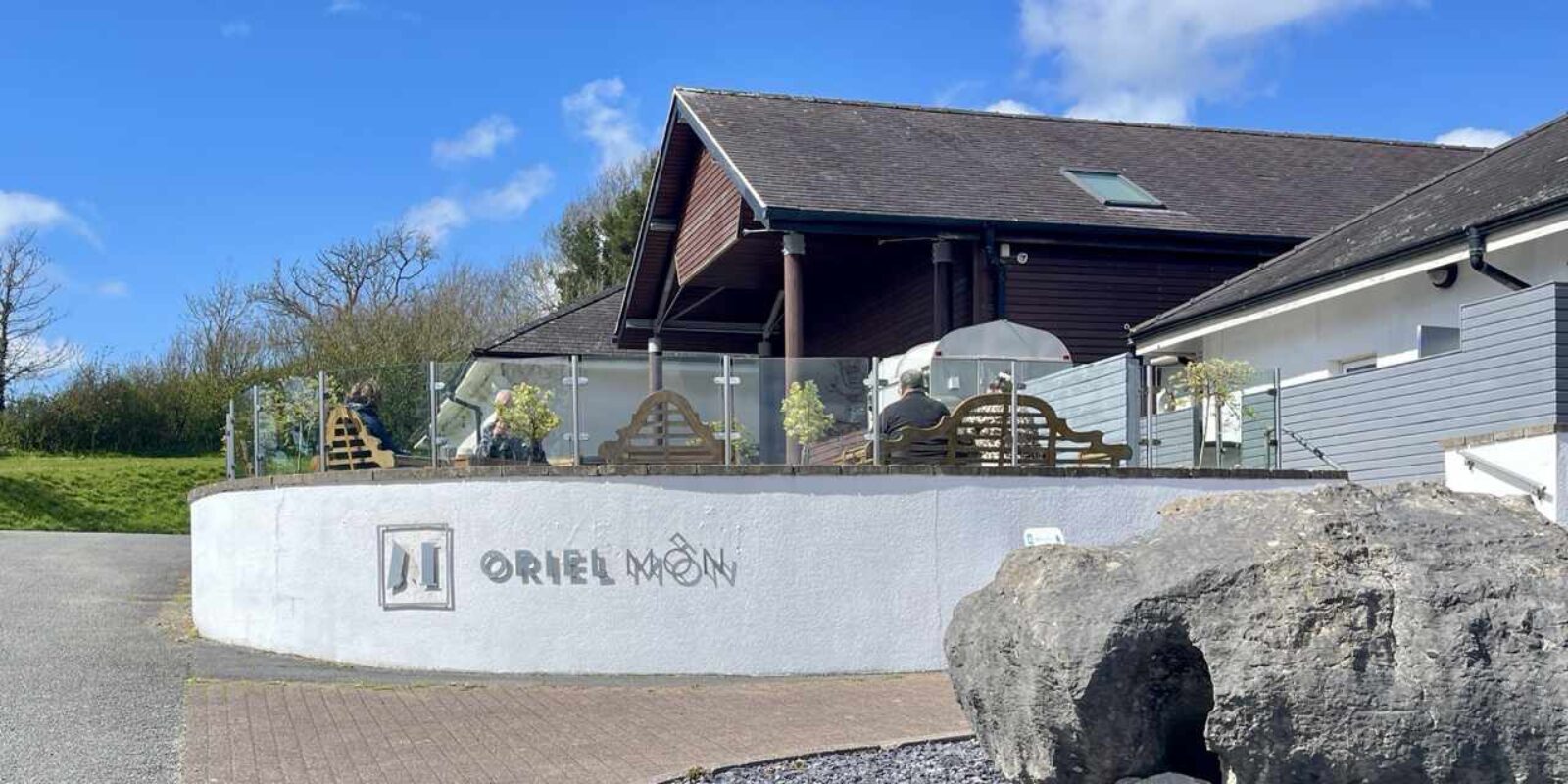
Oriel Môn sits within spacious grounds with ample parking, making it easy to visit even during busy periods.
The site feels welcoming from the moment you arrive. Families will appreciate the large outdoor area, including a children’s playground located at the far end of the grounds. This creates a destination that appeals to different age groups, allowing parents to combine a museum visit with outdoor play.
Standing proudly near the entrance is a bronze sculpture of Sir Kyffin Williams (1918–2006), one of Wales’ most celebrated artists. The sculpture was commissioned in 2019 by David Williams-Ellis and immediately establishes the connection between Oriel Môn and the artistic heritage of Wales.

A Centre Designed for Discovery
The building itself is arranged around a bright central space flooded with natural light from roof windows above.
On one side sits the History Gallery and Museum. On the other is the Art Gallery. Between them are the café and gift shop, which are among the first areas visitors encounter upon entering.
The central hall deserves attention in its own right. Wide ramps lead visitors towards the museum and galleries, while the open space regularly hosts exhibitions, installations and displays. Additional artworks, sculptures and craft pieces line the hallways and corridors, ensuring that the experience begins long before reaching the main galleries.
We found ourselves pausing frequently to admire the displays before even reaching the museum proper.

The Story of Anglesey Through the Ages
The History Gallery provides a fascinating introduction to the island’s past and serves as an excellent starting point for visitors wishing to understand Anglesey’s place in Welsh history.
The journey begins with the island’s earliest inhabitants and archaeological discoveries from the Stone Age and Bronze Age. Displays explore daily life, tools, burial practices and the gradual development of settled communities.
Visitors then move through the Iron Age and into the world of the Ancient Celts. Anglesey held particular significance during this period and became an important centre of Celtic culture.


The Roman invasion receives considerable attention. For almost three centuries, Roman influence shaped life on the island. Artefacts and interpretation panels help bring this period to life and explain the strategic importance of Anglesey within Roman Britain.
The story continues through the era of Welsh rulers, illustrating how the island developed politically, culturally and economically through the centuries.
For visitors exploring Anglesey’s historic sites, Oriel Môn provides valuable context that enhances visits to ancient monuments, churches and archaeological locations across the island.

The Tragic Story of the Royal Charter
One section that particularly captured our attention focused on the wreck of the Royal Charter Shipwreck.
The Royal Charter was among the most famous passenger ships of its era. During the Australian gold rush, thousands of people travelled between Britain and Australia seeking opportunity and fortune.
In October 1859, the Royal Charter was nearing the end of a two-month voyage from Australia to Liverpool. On board were 427 passengers and a crew of 103.
As the vessel approached the coast of Anglesey, a devastating hurricane struck. The ship was driven onto rocks near Moelfre.
The disaster became one of Britain’s most infamous maritime tragedies.
A total of 459 people lost their lives. Gold carried by returning prospectors was scattered beneath the sea, adding another layer of drama to the story.
The tragedy attracted national attention and even brought Charles Dickens to the area. Dickens travelled to investigate the human stories behind the disaster and stayed with the rector of nearby Llanallgo, where many of the victims were buried.
The exhibition transforms statistics into personal stories and offers a powerful reminder of the dangers faced by nineteenth-century travellers.

Celebrating Charles Tunnicliffe
One of Oriel Môn’s greatest treasures is its connection to Charles Frederick Tunnicliffe.
Tunnicliffe remains one of Britain’s most respected wildlife artists and illustrators. Many visitors will recognise his work from books, natural history publications and bird illustrations.
Anglesey played an important role in his artistic career. Living and working on the island, he created detailed studies of wildlife, landscapes and rural life. His measured drawings formed an extensive reference collection that supported decades of artistic work.
His reputation continued to grow throughout his career, culminating in election as a full member of the Royal Academy of Arts in 1954.


Following his death in 1979, a remarkable effort by supporters, local authorities and heritage organisations ensured that much of his artistic legacy remained on Anglesey. Funding from organisations including the National Heritage Memorial Fund, the Royal Society for the Protection of Birds and others helped secure the collection.
That collection became one of the foundations upon which Oriel Môn developed its reputation as one of Wales’ leading regional museums and galleries.
For visitors interested in wildlife art, this alone makes Oriel Môn worth visiting.


Art Galleries and Temporary Exhibitions
During our visit, the main art gallery hosted an exhibition by the Society of Wood Engravers.
The exhibition showcased the remarkable detail and craftsmanship that wood engraving artists continue to achieve using traditional techniques.
A second gallery focused on the work of Sir Kyffin Williams, whose dramatic Welsh landscapes remain among the most recognisable images in modern Welsh art.
One of the strengths of Oriel Môn is its rotating exhibition programme. Returning visitors often find new exhibitions, artists and collections featured throughout the year.
Art Gallery Photos Featuring Artwork from the Society of Woodcut Engravers


Art Gallery Photos Featuring Kyffin Williams’ Artwork


The Café and Gift Shop
No visit would be complete without time spent in the café and shop.
The café offers indoor and outdoor seating, creating a pleasant place to relax after exploring the galleries. The outdoor seating area proved especially popular during our visit.
The gift and art shop was another highlight.
Shelves were filled with a carefully curated selection of: Local crafts, Handmade gifts, Art prints, Jewellery, Books, Cards, Homeware
and Artist-designed products.
The range felt distinctly different from the typical tourist gift shop. Many items reflected the artistic and cultural themes found throughout the museum itself.


Oriel Môn’s Place in the Community
Oriel Môn serves a role that extends far beyond that of a traditional museum.
It functions as a cultural hub for Anglesey, supporting artists, preserving local history, hosting educational programmes and providing a gathering place for residents and visitors alike.
Schools visit regularly. Community events take place throughout the year. Temporary exhibitions bring fresh perspectives and new creative voices to the island.
For visitors, Oriel Môn offers an opportunity to understand Anglesey on a deeper level. The galleries connect the island’s archaeology, history, wildlife, art and culture within a single accessible destination.

Planning Your Visit
Oriel Môn is open Tuesday to Sunday from 10am to 5pm.
Allow at least two to three hours if you want to explore both the museum and art galleries properly. Art lovers, history enthusiasts and families could easily spend much longer.
Our visit began as a search for shade on a hot afternoon. We left with a far greater appreciation for Anglesey’s history, artistic heritage and cultural identity.
For anyone visiting Anglesey, Oriel Môn deserves a place on the itinerary. It brings together thousands of years of history, celebrated Welsh artists, fascinating exhibitions and a welcoming community atmosphere under one roof.
Location Information
Address: Oriel Môn, Rhosmeirch, Llangefni LL77 7TQ
Open Tuesday to Sunday and Bank Holiday Mondays, 10am to 5pm. Closed Christmas and Boxing Day, New Year’s Eve and Day.
Website: https://www.orielmon.org/
Shop: https://www.orielmon.shop/
Map: Open in Google