All photos and images are copyright protected. Digital images and prints are available for purchase, please use the contact page or leave us a message below. All rights reserved
Some places leave a lasting impression before you even reach the main attraction. That was certainly our experience at South Stack Lighthouse, one of the most photographed landmarks in North Wales and a destination that combines dramatic coastal scenery, fascinating history and incredible wildlife watching opportunities.
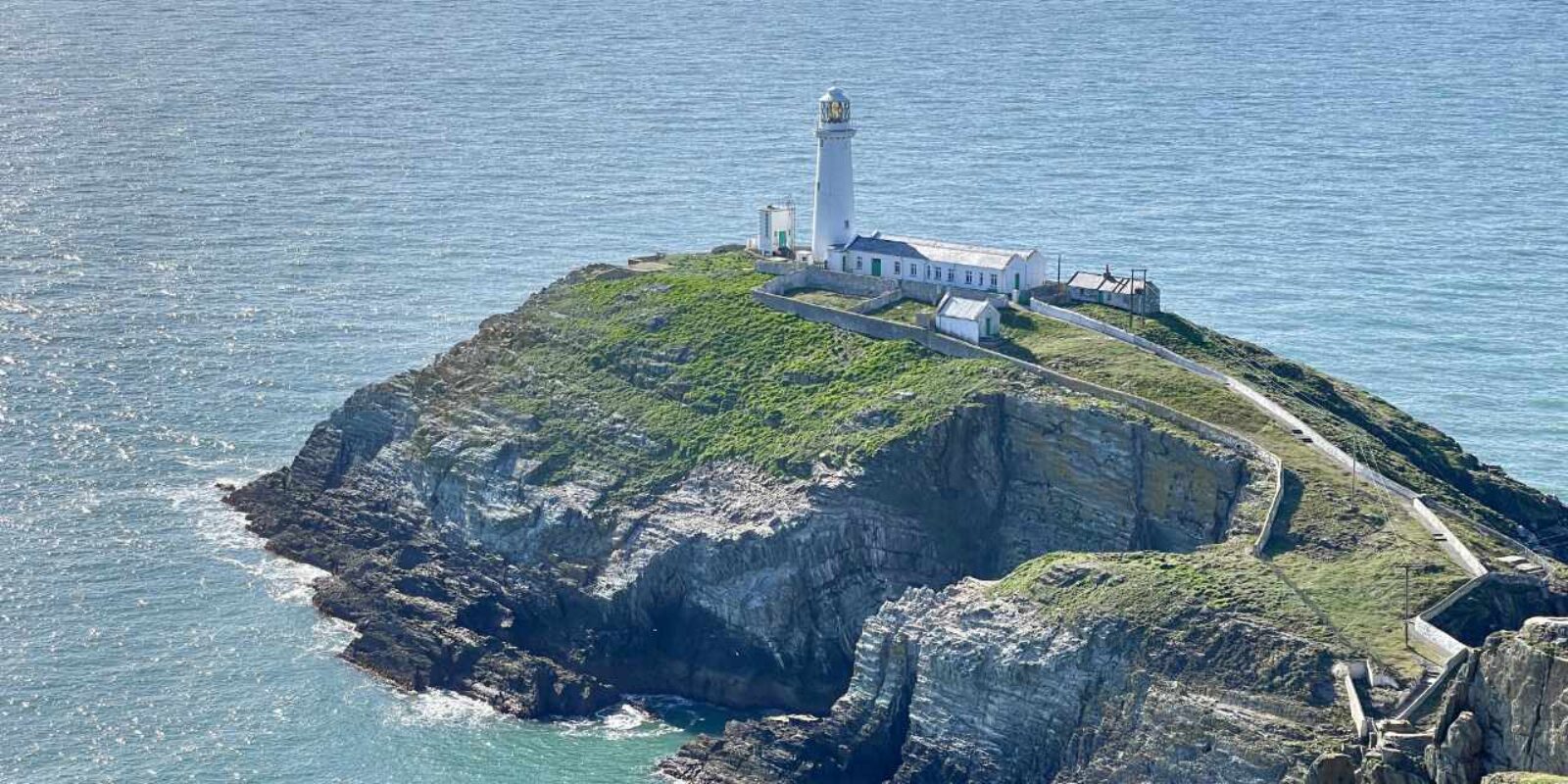
Located on the western edge of Holy Island, just a few miles from Holyhead, South Stack stands on a small rocky island known as Ynys Lawd. Since 1809, the lighthouse has guided ships safely through the often treacherous waters of the Irish Sea.
Unfortunately, the lighthouse itself was closed during our visit. That did little to diminish the experience. The surrounding landscape proved every bit as memorable as the lighthouse itself.

First Sight of South Stack
Few Welsh landmarks enjoy such a dramatic setting.
Perched atop a rocky island separated from the mainland by a narrow bridge, the lighthouse appears almost suspended between sea and sky. Rugged cliffs plunge into the crashing waves below while seabirds circle overhead.
On a bright summer afternoon, the sea sparkled beneath the cliffs and visitors gathered along the pathways, cameras in hand, taking in the views.
The strong midday sun was not ideal for photography, especially with the lighthouse directly illuminated from above. The scenery more than compensated for the lighting challenges.
Every angle seemed to reveal another impressive view.

The Famous Steps
One of the defining features of a visit to South Stack is the descent towards the lighthouse.
Visitors who wish to tour the lighthouse must tackle approximately 400 steps that descend the cliffs before crossing the bridge onto Ynys Lawd.
Although we did not continue all the way to the island itself, we descended around halfway down the staircase.
The steps were surprisingly manageable and felt safe throughout. Handrails are provided along sections of the route, and there are several places where visitors can stop, rest and admire the views.


The journey down quickly becomes an attraction in its own right.
Each bend in the staircase reveals a new perspective:
- Dramatic sea cliffs
- Sweeping coastal views
- Nesting seabirds
- Crashing waves below
- The lighthouse framed against the Irish Sea
At many points, visitors paused to take photographs, capture selfies and simply absorb the scenery.
The experience felt less like a walk to a lighthouse and more like a succession of spectacular viewpoints connected by a staircase.


A Lighthouse with Over Two Centuries of History
The lighthouse has stood watch over these waters since 1809.
Before modern navigation systems, the rocky coastline around Holy Island presented significant dangers to shipping. The lighthouse became an important beacon guiding vessels travelling through one of Britain’s busiest sea routes.
Today, visitors can join guided tours that include the engine room and the lighthouse tower itself when open.
The climb remains a major part of the experience and contributes to the sense of adventure associated with visiting South Stack.

A Special Place Called Ynys Cybi
The wider landscape surrounding South Stack is equally fascinating.
Holy Island is known in Welsh as Ynys Cybi, named after Saint Cybi, a sixth-century saint whose influence remains visible throughout the area.
For centuries this coastline has attracted pilgrims, travellers, sailors, artists and naturalists.
Standing on the cliffs, it is easy to understand why.
The combination of sea, sky and rugged landscape creates an atmosphere that feels both wild and timeless.

South Stack During World War II
One information board particularly caught our attention.
During the Second World War, local residents would stand on these cliffs watching the horizon for German U-boats and aircraft.
Holy Island played an important role throughout the conflict due to its strategic position in the Irish Sea.
Many local men served in the Royal Navy, including crew members aboard local vessels such as the SS Scotia.
Nearby Holyhead Port became a significant transport and military hub, making it a target for enemy attacks. German aircraft bombed Holyhead on multiple occasions during the war.
The island also lay along the return routes used by German bombers travelling back across the Irish Sea, resulting in bombs sometimes being jettisoned over the area.
Learning this history added another dimension to the landscape around us. The cliffs that now attract photographers and walkers once served as observation points during a period of great uncertainty.

Walking Trails and Coastal Adventures
Visitors arriving at South Stack quickly discover that the lighthouse is only one part of the attraction.
The surrounding headland offers excellent walking opportunities, with well-maintained paths running along the cliffs and connecting with longer coastal routes.
Anglesey Coastal Path passes through this area, providing access to some of the finest coastal scenery in Wales.
The paths offer:
- Panoramic sea views
- Dramatic cliff-top scenery
- Excellent birdwatching opportunities
- Historical sites and viewpoints
- Spectacular sunset locations
Walkers can easily spend several hours exploring the surrounding landscape.
Wildlife at the RSPB South Stack Reserve
Nature lovers will find plenty to enjoy here.
Adjacent to the lighthouse lies the renowned RSPB South Stack nature reserve, one of the best birdwatching locations in Wales.
The cliffs provide nesting sites for:
- Puffins (seasonal)
- Razorbills
- Guillemots
- Fulmars
- Kittiwakes
If you are a wildlife and wildlife enthusiast, birder, twitcher or conservationist looking to spot these wildlife. Here are some of our artistic creations and illustrations, now available on T-shirts. Click on the images below to visit the T-shirt page.


The reserve is also one of the best places in Britain to spot the distinctive Chough, a rare member of the crow family recognised by its bright red bill and acrobatic flight.
Birdwatchers often spend hours scanning the cliffs and sea from the viewing areas.
For visitors who enjoy wildlife photography, binoculars and a telephoto lens are highly recommended.
A Stop at the RSPB Café
After exploring the cliffs and viewpoints, many visitors make their way to the nearby café operated at the reserve.
The café offers welcome refreshments alongside impressive coastal views, creating an ideal place to relax before continuing your journey around Anglesey.
Large windows frame the surrounding landscape, allowing visitors to continue wildlife spotting while enjoying a drink or snack.
On busy summer days, it becomes a popular meeting point for walkers, photographers and birdwatchers.
Useful Visitor Information
If you’re planning your own visit to South Stack Lighthouse, here are a few helpful points:
- Location: Approximately 3 miles west of Holyhead
- Postcode: LL65 1YH
- Allow at least two to three hours for exploring
- Wear comfortable footwear with good grip
- Bring binoculars if you enjoy wildlife watching
- Check lighthouse opening status before travelling
- Weather conditions can affect access
- Dogs are not permitted on the lighthouse island itself
- The lighthouse tour involves approximately 400 steps
One of Anglesey’s Essential Stops
Even with the lighthouse closed, South Stack became one of the highlights of our Anglesey adventure.
The views alone justify the journey. Add in the fascinating maritime history, wartime connections, coastal walking routes and exceptional wildlife, and it becomes clear why this location attracts visitors from across the world.
The lighthouse may be the headline attraction, though the cliffs, sea and surrounding landscape are what make South Stack truly unforgettable.
If you are exploring Anglesey, this is one destination that deserves plenty of time on your itinerary. Bring a camera, wear comfortable shoes and prepare for some of the most spectacular coastal scenery in Wales.